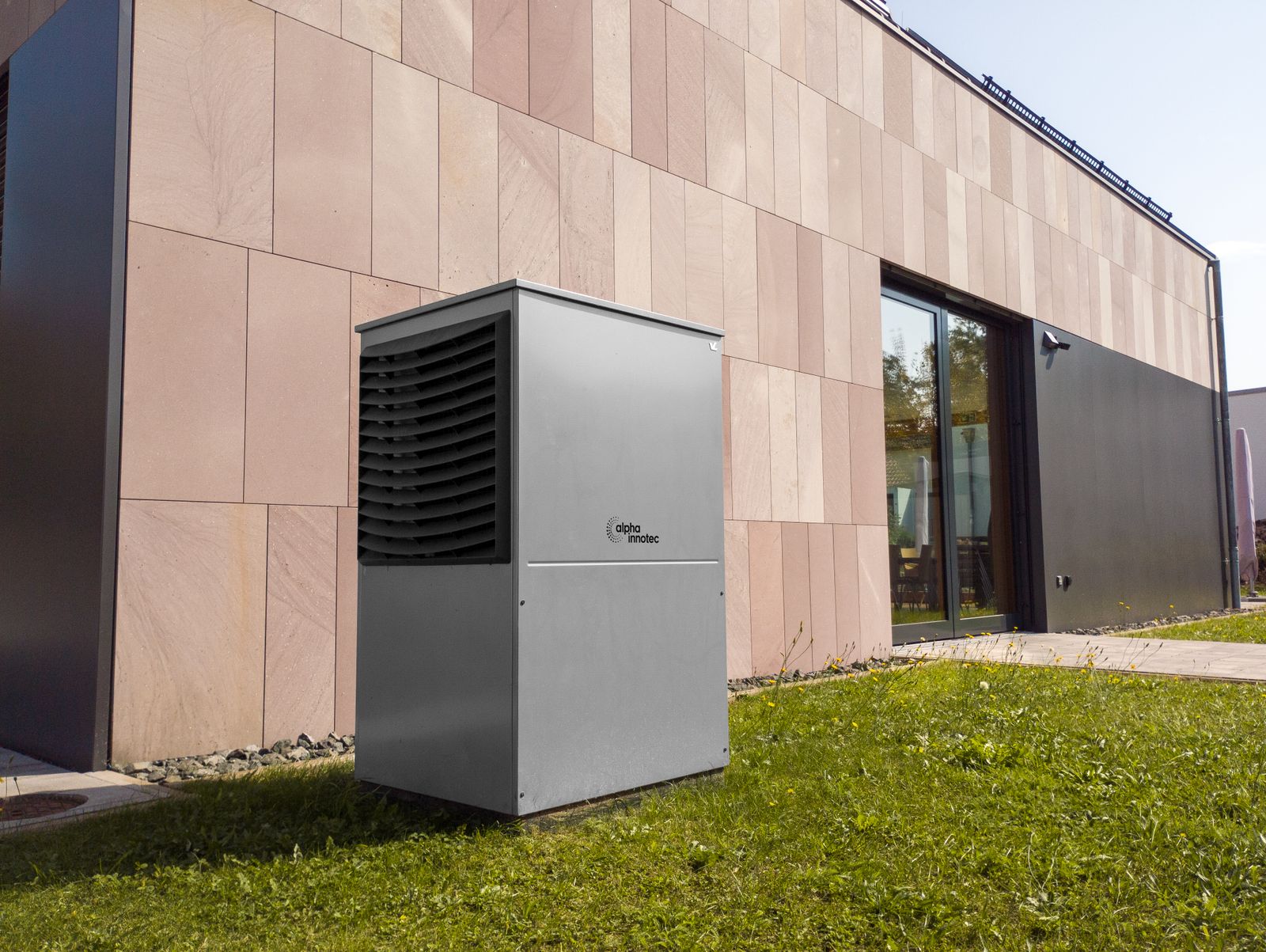
A hybrid heating system pairs an air source heat pump with your existing boiler. The heat pump runs for most of the year, and the boiler steps in on the coldest days. An intelligent controller switches between them automatically, giving you lower-carbon heating while keeping the reliability of a boiler as backup.
A hybrid heating system combines an air source heat pump with a conventional boiler in a single property. The heat pump handles the heating for most of the year, extracting warmth from the outside air. The boiler takes over or assists during the coldest days when the heat pump alone cannot reach the target temperature. The two heat sources are managed by an intelligent controller that monitors outdoor temperature and indoor demand, deciding which unit runs and when. This setup is sometimes called a bivalent system, meaning two heat sources work together rather than one replacing the other.
Last updated: 28 October 2026
Reviewed by the Scottish Energy Efficiency team.
How does a hybrid heating system work?
A hybrid system uses an intelligent controller to switch between a heat pump and a boiler. The heat pump runs in mild weather; the boiler assists or takes over when outdoor temperatures drop below a set bivalent point, typically between 0 and -5 degrees in Scotland.
The controller is the brain of the system. It is programmed with a bivalent temperature — the outdoor temperature at which the heat pump can no longer efficiently meet the heating demand on its own. Above that temperature, the heat pump runs alone, extracting warmth from the outside air even at sub-zero levels. Below it, the controller brings the boiler in to top up the flow temperature. In some setups the two run simultaneously; in others the boiler takes over entirely. The controller also manages hot water production, directing the heat pump to heat the cylinder when possible and switching to the boiler when the heat pump cannot reach the required cylinder temperature. This means your heating and hot water are always available, regardless of weather.
What are the main components of a hybrid system?
A hybrid system has five main components: an air source heat pump (outdoor unit), an indoor hydraulic module, a hot water cylinder, your existing boiler, and an intelligent controller that coordinates them.
The outdoor unit is the heat pump, which contains a fan, a compressor, and a heat exchanger. It sits on a wall bracket or ground frame and needs adequate airflow. The indoor hydraulic module contains the circulating pump, expansion vessel, and diverter valves that direct heat to radiators or the cylinder. The hot water cylinder stores domestic hot water, heated by the heat pump or boiler depending on conditions. Your existing boiler remains connected to the radiator circuit and can fire when the controller calls for it. The intelligent controller sits between all components, reading outdoor temperature sensors and indoor thermostats to decide which heat source runs.
Why keep the boiler instead of going fully electric?
Keeping the boiler means you retain a reliable backup heat source for the coldest days, can use existing radiators that may be undersized for a heat pump alone, and avoid the disruption and cost of a full heat pump conversion.
A full heat pump system requires every radiator to be sized for the lower flow temperatures a heat pump operates at — typically 35 to 50 degrees compared to 60 to 75 degrees for a boiler. That can mean replacing most or all radiators. A hybrid system lets the boiler run at higher temperatures on cold days, so existing radiators may remain. You also avoid needing a larger hot water cylinder and upgraded pipework that a full conversion can require. The trade-off is that a hybrid system retains a fossil fuel dependency for the coldest days, whereas a full heat pump system is fully electric. For many Scottish homes with existing boilers and radiators, the hybrid approach is the more practical first step.
Is a hybrid system the same as a dual-fuel system?
The terms are often used interchangeably, but a hybrid system specifically means a heat pump and boiler working together through a controller. A dual-fuel system can also refer to a boiler with two fuel types, such as gas and LPG.
In the heating industry, hybrid and dual-fuel are sometimes used to mean the same thing — a system with two heat sources. However, dual-fuel can also describe a boiler capable of running on two different fuels, which is a different concept entirely. A hybrid heating system in the context of this guide always means an air source heat pump paired with a boiler, coordinated by an intelligent controller. The two heat sources may use different fuels — the heat pump runs on electricity and the boiler may run on gas, oil, or LPG — but the defining feature is the controller managing the switch between them.
What kind of boiler works with a hybrid system?
Most modern conventional boilers — gas, oil, or LPG — can work in a hybrid setup, provided they are still serviceable and compatible with the controller. The survey confirms compatibility before any installation is planned.
The boiler does not need to be new, but it needs to be in working condition and capable of responding to the controller signals. Combi boilers can work in some hybrid configurations, but a system boiler with a separate hot water cylinder is more common because the hybrid controller needs to manage cylinder heating as well as radiator heating. If your boiler is nearing end of life, the survey will flag it, and you may need to budget for a replacement boiler as part of the installation. The surveyor checks the boiler model, age, condition, and control interface to confirm it can integrate with the heat pump controller.
Frequently asked questions
Can I keep my existing radiators with a hybrid system?
In most cases yes. The boiler can run at higher temperatures on cold days, so existing radiators may be adequate. The survey checks each room to confirm.
Does a hybrid system work with a combi boiler?
It can, but a system boiler with a separate cylinder is more common. The survey assesses whether your combi is compatible or if changes are needed.
How much space does the indoor equipment need?
The indoor hydraulic module and hot water cylinder need roughly the same space as a standard cylinder cupboard. The survey measures available space.
Will my heating still work if the heat pump breaks down?
Yes. The boiler acts as a backup. If the heat pump is serviced or repaired, the boiler can handle heating and hot water independently.
Do I need a new electrical supply for the heat pump?
Most homes have an adequate supply, but the survey checks capacity. If an upgrade is needed, the surveyor will flag it before installation.
Fill in the form and we will call you within one working day to arrange a survey. No obligation · We install through MCS-certified partners · Scottish homes and businesses